



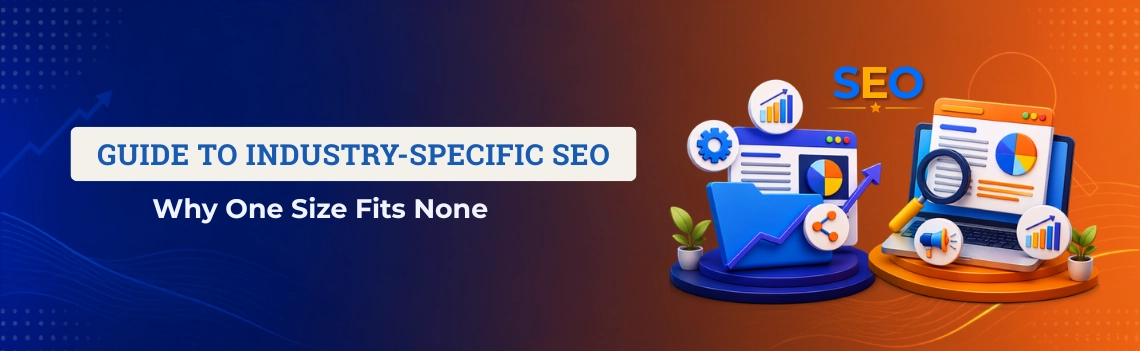
SEO doesn’t always work the same way for everyone. A real estate agent needs different strategies than a lawyer. Meanwhile, SEO built for an online store will not work for a hospital. Think of it like this: the basic rules of getting found online are the same, but the way you follow them depends entirely on your business.
Copying a generic rulebook wastes time and money. To win, you need an SEO strategy tailored to how your customers actually search. To help you with that, our team at Capsicum Mediaworks, the best SEO agency in Mumbai, India, has built this guide to some industry-specific SEO strategies for maximum visibility.
Why Industry-Specific SEO Matters
1. People search differently depending on what they want.
When someone types “real estate agent near me,” they’re ready to buy a house. Meanwhile, when someone types “best running shoes for marathon,” they’re comparing options before spending money. So, these are completely different situations, and Google knows it.
2. Google is getting smarter about this.
The search engine now understands what people actually need when searching. If you’re a healthcare provider, your content needs to sound credible and medical. If you’re a financial advisor, your page needs to have information that should benefit your niche. Putting up generic content for visibility doesn’t work anymore. Why? It doesn’t give people what they’re actually looking for on your website, even confusing them on what you are offering.
3. Your competition isn’t the same as everyone else’s.
In some industries, you’re fighting with companies with huge marketing budgets, meanwhile, in others, nobody might really be invested in SEO yet. This means you can dominate if you move fast with the right strategy.
Now that you know the importance, let’s check out how you should implement SEO tactics based on your industry.
You’ve Finally Found the Right SEO Agency!
Capsicum has the SEO solutions you’ve been searching for. Don’t let another day go by where your competitors are looking down on you! It’s time to be discovered!
Get Started NowSEO Strategies for Different Industries
1. Real Estate SEO: How Agents Get Found by Local Buyers
Buyers do their homework online long before they call an agent. They check out neighborhoods, compare listings, and even Google an agent’s name to see if they’re legit. So don’t just chase generic keywords like “homes for sale,” get specific with local, neighbourhood-based keywords instead. Additionally, fill out your Google Business Profile and use good listing photos so people forget they’re just scrolling.
2. Educational Website SEO: How Schools Get Found by Students and Parents
Students and parents thoroughly research institutions. So, you need to build dedicated pages for each program, create admission guides covering applications and deadlines, use structured data markup for your courses and events, and develop career services content. This builds credibility while improving search visibility.
3. Law Firm SEO: How Law Firms Build Trust Online
When hiring a lawyer, people genuinely look for someone who they can trust. So, you need to build pages for every specific practice area and optimize Google’s strict E-E-A-T guidelines by showcasing your credentials, bar admissions, and client reviews. However, make sure to maintain consistency across all premium directories.
4. Financial Services SEO: How Financial Companies Build Trust Online
People are very protective of their money, which means Google subjects financial websites to the highest scrutiny. To rank, you need to ditch the confusing jargon and publish exceptionally clear, detailed guides on retirement planning, wealth management, and tax mitigation. However, make sure to stay compliant, accurate and make your service pages crystal clear about what your offer. You can also add some local SEO if you are targeting specific markets.
5. Manufacturer SEO: How Manufacturers Reach B2B Buyers
Manufacturing SEO is very different from the rest because you’re catering to engineers and procurement teams who tend to search parts by their exact name and specifications. So your product pages need to have detailed material data, industrial compliance codes, and other specifications. You’ll also have to back it up with case studies showing measurable results along with educational content to position your brand as a definitive authority.
6. Ecommerce SEO: How Online Stores Get More Sales
Organic visibility directly dictates sales volume in ecommerce SEO. You need a logical site structure that navigates cleanly from primary categories down to individual product pages. Every page has to be optimized with unique descriptions, high-res images, and proper product schema for Google to understand the products. Additionally, work on mobile page speed, as nobody likes waiting around for a slow page.
7. Travel Company SEO: How Travel Companies Attract Bookings
Travel SEO requires you to inspire users while making it incredibly easy for them to book. You can create destination guides, and seasonal calendars before holidays and peak vacation seasons. Optimise your imagery and video assets for fast mobile loading, and implement local SEO tactics so your tours and hotel properties get found instantly.
8. Small Business SEO: How Small Businesses Win Local Customers
You don’t need a huge budget; you need to be the obvious local choice. Optimising your small business online means keeping your GBP polished, posting weekly updates, answering public FAQs on different platforms, and collecting reviews from happy customers. Combine this with building and optimising pages for every service along with creating content for every area you serve, and you may have a chance to beat the big competitors in your immediate area.
9. Healthcare SEO: How Healthcare Providers Build Patient Trust
When it comes to health, people want facts from real experts, not guesses. Even Google monitors healthcare SEO content heavily, as inaccurate medical advice can cause real-world harm. So, every piece of content should be meticulously reviewed by credentialed medical professionals. Additionally, create clear pages for each service, and offer helpful patient resources to gain more credibility.
Partner with an SEO Team That Understands Your Industry
At Capsicum Mediaworks, we threw the generic agency templates out the window a long time ago, recognising that the strategy driving thousands of sales for an e-commerce platform will completely flop if applied to a precision B2B manufacturer or a law firm.
Our team of SEO experts dives deep into the unique search ecosystem of your specific industry, analysing your true competitors and how your target demographic makes decisions online.
Our data-driven process integrates:
- Granular, intent-based keyword mapping.
- Advanced technical and schema optimization tailored to your site architecture.
- Audience-centric content development that fulfills Google’s E-E-A-T guidelines.
- Transparent tracking focused on pipeline velocity, leads, and revenue.
Having worked with 600+ clients, we firmly believe that rankings mean nothing if they aren’t positively impacting your bottom line. So, our experts don’t focus on vanity metrics; we focus on real business growth.
Conclusion
As 2026 unfolds, winning at SEO means understanding your industry just as deeply as you understand search algorithms. Generic, one-size-fits-all strategies simply don’t work anymore. Your digital strategy needs to match how your real buyers search, the competitive pressures unique to your market, and the trust signals your industry demands. The brands topping search results aren’t the ones with the biggest budgets; they’re the ones who’ve mapped their industry’s search behaviour and executed a focused, tailored strategy.
Want to Skyrocket Your Online Presence? Connect Now!
Call Us Now on +91 98330 94626 (Sales) or WhatsApp Us or send us an email to hello@capsicum.in to discuss your project further!
- 45+ Strong Member Team.
- 651+ Clients Served Globally.
- 15+ Years of Experience.
- 23+ Int’l Countries Served.







 +1 888 645 1555